
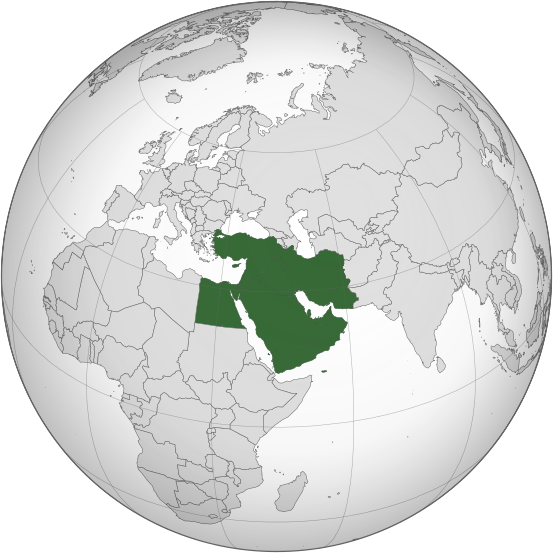
The United States and Iran have exchanged military strikes across the Middle East, with Tehran claiming retaliatory attacks on U.S. infrastructure in Kuwait and Bahrain, hours after Washington announced strikes on multiple targets within Iran.
This direct exchange marks a significant escalation in regional tensions, shattering an already fragile ceasefire and immediately raising fears of a broader conflict. The extent of damage and any potential casualties from these strikes remain unconfirmed by independent sources.
U.S. military forces initiated strikes overnight, reportedly targeting several undisclosed locations inside Iran. Washington has not yet provided specific details regarding the nature of these targets or the precise methods employed in the attacks.
Following the American actions, Iran reported launching its own retaliatory missile or drone attacks. Iranian state media indicated these strikes were aimed at "U.S. infrastructure" located in the Gulf states of Kuwait and Bahrain. Neither Kuwaiti nor Bahraini authorities have confirmed any immediate reports of casualties or significant damage from these alleged attacks.

Ceasefire Accusations From Both Sides
Both Washington and Tehran swiftly accused each other of violating an existing ceasefire agreement that had been in place for several weeks. A spokesperson for the Iranian foreign ministry stated that the U.S. actions constituted a "clear breach" of the truce, describing them as acts of aggression.
Conversely, U.S. officials asserted their strikes were a necessary response to prior Iranian provocations, which they claimed had also violated the terms of the fragile ceasefire. These mutual accusations highlight the deep mistrust that persists between the two long-standing adversaries.
The ceasefire, brokered by international mediators only weeks ago, was intended to de-escalate months of heightened tensions in the Persian Gulf. It had established a demilitarised zone in key border areas and had seen a temporary halt to potentially provocative naval patrols in critical shipping lanes.
This current exchange of strikes effectively shatters those delicate diplomatic efforts. The agreement had offered a glimmer of hope for a more stable regional environment after a period marked by frequent maritime incidents and proxy confrontations.
Immediate International Alarm
The renewed military activity has triggered immediate international alarm. Diplomatic efforts are expected to intensify rapidly to prevent a full-scale regional conflict that could have devastating consequences for global stability and economic markets.
The United Nations Security Council is reportedly being convened for an emergency session later this week to discuss the escalating situation. Major powers are likely to urge both sides to exercise restraint and return to the terms of the ceasefire agreement.
Analysts suggest that the targeting of infrastructure in third-party nations like Kuwait and Bahrain, if confirmed, could draw more regional players into the conflict. This development complicates any potential diplomatic resolution and broadens the theatre of operations.
The stability of global oil markets is also under immediate threat from these developments. Any prolonged disruption to shipping in the Persian Gulf, a vital artery for international oil trade, could trigger a sharp rise in crude prices, impacting economies worldwide.
The path forward remains highly uncertain as both nations maintain their positions. Further diplomatic overtures will face considerable challenges in light of the mutual accusations of ceasefire violations and the direct military action undertaken.
Discussion (0)
Sign in to join the discussion.